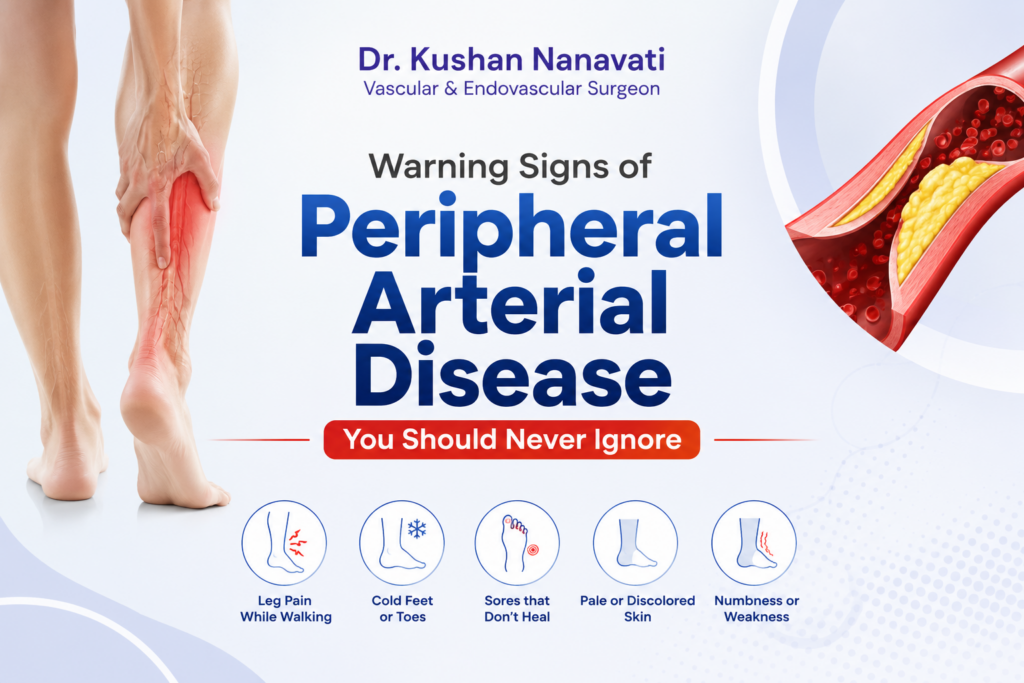

Most people assume leg pain, tiredness, or cold feet are just signs of getting older. But sometimes, these everyday complaints are early warnings of Peripheral Arterial Disease (PAD) – a condition where narrowed arteries reduce blood flow to the legs. PAD is often silent in its early stages, which is exactly why it goes unnoticed until it becomes serious.
Dr. Kushan Nanavati, Vascular Surgeon in Vadodara, shares the warning signs of PAD that are frequently dismissed as minor issues – and explains why catching them early can prevent life-altering complications like non-healing wounds or amputation.
What Is Peripheral Arterial Disease?
Peripheral Arterial Disease develops when fatty deposits (plaque) build up inside the arteries that carry blood to your legs and feet. Over time, this buildup narrows the arteries, restricting blood flow. Since the legs receive less oxygen-rich blood, especially during physical activity, symptoms tend to appear gradually, often mistaken for normal aging, muscle fatigue, or a sedentary lifestyle.
Left unaddressed, PAD doesn’t just affect your legs – it’s a strong indicator of blockages elsewhere in the body, including the arteries supplying the heart and brain, raising the risk of heart attack and stroke.
1. Leg Pain or Cramping While Walking (Claudication)
2. Numbness or Weakness in the Legs
3. Coldness in One Leg or Foot
4. Sores or Wounds on the Feet or Toes That Won't Heal
When circulation is compromised, even minor cuts or blisters on the feet or toes can take weeks to heal – or fail to heal entirely. Non-healing wounds are a serious warning sign and require prompt evaluation, since they can progress to infection or gangrene if untreated.
5. Changes in Skin Color
6. Slower Hair and Nail Growth on the Legs and Feet
7. Erectile Dysfunction in Men
8. Weak or Absent Pulse in the Foot or Leg
9. Pain in the Feet or Toes at Rest, Especially at Night
10. Shiny Skin or Muscle Atrophy in the Legs
Why These Signs Are Often Ignored
Who Is at Higher Risk of PAD?
Certain factors substantially increase your risk of developing PAD, and if you fall into these categories, it’s worth paying closer attention to the warning signs above:
- Diabetes
- Smoking, current or past
- High blood pressure
- High cholesterol
- Age above 50
- Family history of vascular disease
- Obesity or a sedentary lifestyle
- Existing heart disease
What to Do If You Notice These Signs
If you recognize any of these warning signs, the right next step is a consultation with a vascular surgeon rather than waiting to see if symptoms improve on their own. Diagnosis typically involves:
- Ankle-Brachial Index (ABI) – comparing blood pressure in the ankle and arm to detect reduced blood flow
- Doppler ultrasound – visualizing blood flow and pinpointing blockages
- CT or MR angiography – for a more detailed view of the arteries when needed
Early diagnosis matters because PAD is highly manageable when caught in time – through lifestyle changes, medication, or minimally invasive procedures like angioplasty – well before more invasive treatment becomes necessary.
Don't Wait for Symptoms to Worsen
Ignoring these warning signs doesn’t make the underlying problem go away – it allows it to progress silently. As a Vascular Surgeon in Vadodara, Dr. Kushan Nanavati emphasizes that early evaluation is the single most effective step in preventing PAD from advancing to severe complications like non-healing ulcers, infections, or limb loss.
If you or a loved one is experiencing any of the signs above, don’t dismiss them as “just aging.” A timely consultation could make all the difference.
Frequently Asked Questions
1. What is the earliest sign of Peripheral Arterial Disease?
Leg pain or cramping while walking that eases with rest, known as claudication, is typically the earliest noticeable symptom, though many people experience no symptoms at all in the early stages.
2. Can Peripheral Arterial Disease be present without any symptoms?
3. Is PAD dangerous if left untreated?
4. How is Peripheral Arterial Disease diagnosed?
5. Can PAD be reversed?
6. Which doctor should I consult for PAD symptoms in Vadodara?
7. Is leg pain always a sign of PAD?
Book an Appointment
Address:OPD-29,1st Floor, AADICURA Hospital Winward Business Park, Jetalpur Rd, Vadodara, Gujarat 390007
Phone: 090543 77563