
Introduction
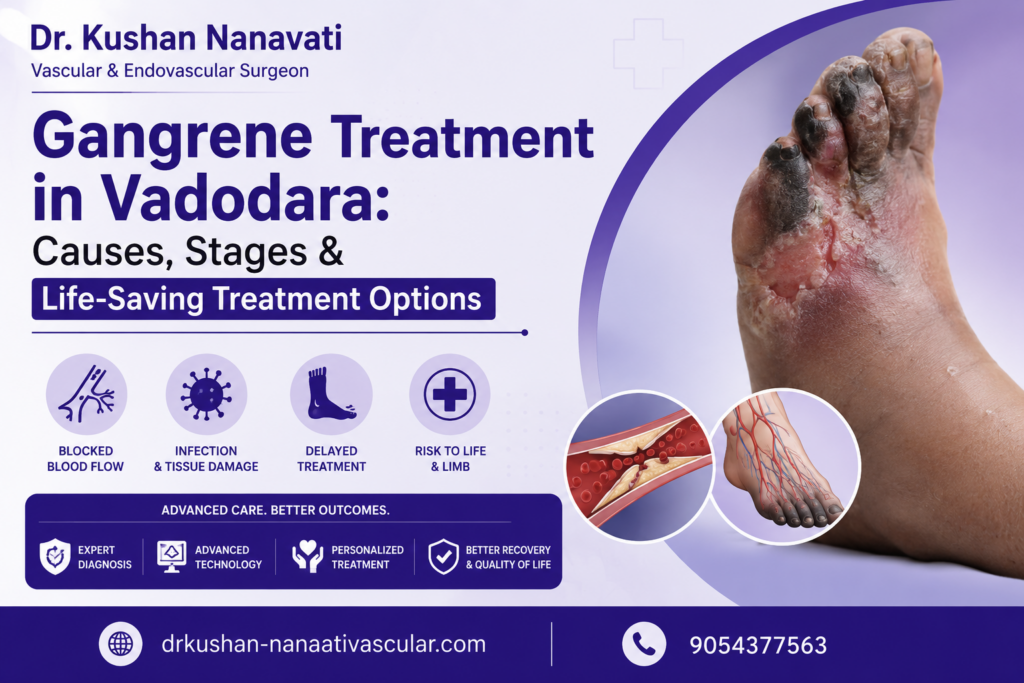
Gangrene is one of the most feared outcomes in vascular medicine – and for good reason. It represents the death of body tissue due to loss of blood supply or severe infection, and if not treated promptly and correctly, it can spread rapidly, leading to amputation or even death from sepsis.
Yet many patients in Vadodara and across Baroda district arrive at a vascular clinic only when gangrene is already advanced. The reasons vary – delayed recognition of symptoms, fear, distance from specialist care, or the mistaken belief that nothing can be done.
The truth is that gangrene treatment in Vadodara has advanced considerably. With the right vascular intervention at the right time, many patients who would previously have faced amputation can have their limbs saved. This guide explains everything you need to know – from causes and stages to the treatment options available today.
What Is Gangrene?
Gangrene refers to the death (necrosis) of body tissue. It most commonly affects the toes, feet, fingers, and lower legs – extremities that are furthest from the heart and most dependent on healthy blood supply.
There are three primary types:
Dry Gangrene – Caused by chronic, progressive reduction in blood supply – most commonly due to peripheral arterial disease (PAD) or diabetes. The affected tissue gradually dries out, becomes dark (black or dark brown), and hardens. Dry gangrene tends to progress slowly and is typically not infected initially.
Wet Gangrene – Caused by bacterial infection combined with poor blood supply. Wet gangrene is moist, swollen, foul-smelling, and progresses rapidly. It carries a high risk of spreading infection to the bloodstream (sepsis) and is a medical emergency requiring immediate treatment.
Gas Gangrene – is a particularly severe, rapidly spreading form of wet gangrene caused by specific bacteria (Clostridium species) and requires emergency surgical intervention.
What Causes Gangrene?
The root cause of most gangrene cases in Vadodara is reduced or blocked blood supply to the affected area. The most common underlying conditions include:
- Diabetes mellitus – the single most common risk factor in India; damages both blood vessels and nerves, impairing wound healing and masking pain
- Peripheral Arterial Disease (PAD) – progressive narrowing of arteries in the legs from atherosclerosis (plaque buildup)
- Smoking – a major independent risk factor for arterial disease and gangrene
- Trauma or injury – crush injuries, frostbite, or severe infections can cut off blood supply
- Blood clots (embolism or thrombosis) – sudden blockage of a major artery
- Immunosuppression – patients on steroids, chemotherapy, or with HIV may be more susceptible
In Vadodara, the majority of gangrene cases seen by Dr. Kushan Nanavati involves diabetic patients with foot wounds that were either ignored or inadequately treated at earlier stages.
Stages of Peripheral Arterial Disease Leading to Gangrene
Gangrene does not happen overnight. PAD progresses through identifiable stages:
Stage 1 – Intermittent Claudication Cramping or pain in the calf, thigh, or buttock when walking a fixed distance. Pain disappears with rest. This stage is often dismissed as “old age” or arthritis.
Stage 2 – Rest Pain Severe burning pain in the feet and toes, present even at rest, often worse at night. Patients may hang their feet over the bed for relief. This is a critical warning stage.
Stage 3 – Tissue Loss and Gangrene Non-healing ulcers, blackening of toes, or spreading tissue death. This is the final stage and represents a limb-threatening emergency.
Recognising Stage 1 and Stage 2 and seeking vascular care in Vadodara at that point can prevent the disease from ever reaching Stage 3.
Treatment Options for Gangrene in Vadodara
1. Revascularisation - Restoring Blood Flow (The Most Critical Step)
In most cases of gangrene caused by blocked arteries, the priority is to restore blood flow to the affected area. Without adequate blood supply, no amount of wound care or antibiotics will allow healing. Revascularisation options include:
Peripheral Angioplasty and Stenting A minimally invasive catheter-based procedure where a blocked or narrowed artery is opened using a balloon (angioplasty) and kept open with a stent. Performed through a small puncture in the groin or wrist – no large incisions. This is often the first-choice revascularisation approach in Vadodara for suitable patients.
Bypass Surgery For blockages too long or complex for angioplasty, a bypass graft – using the patient’s own vein or an artificial graft – reroutes blood flow around the blocked segment. Bypass surgery is a larger open procedure but remains highly effective for complex arterial disease.
2. Debridement - Removing Dead Tissue
Once blood flow is restored (or in cases of infected wet gangrene requiring urgent control), the dead or infected tissue must be removed surgically. This procedure, called debridement, clears the wound of necrotic tissue, reduces infection load, and creates a clean environment for healing.
Debridement may be performed in stages over multiple sittings until the wound margins are clean and viable.
3. Antibiotic Therapy
4. Wound Care and Dressings
5. Amputation (When Necessary)
If revascularisation is not possible, if the infection has spread beyond salvageable tissue, or if the patient’s overall condition makes limb-saving surgery too risky, limited amputation (of a toe, foot, or leg segment) may be the safest option to control life-threatening infection.
However, with modern vascular techniques available in Vadodara – including complex endovascular procedures and bypass surgery – many patients who previously would have required major amputation can be successfully treated with limb salvage.
The Critical Role of Early Consultation
The single most important message for patients in Vadodara: do not wait.
If you are diabetic and have a foot wound that is not healing, seek vascular assessment immediately – do not wait for it to turn black.
If you have PAD and are experiencing rest pain or blackening of toes, go to a vascular surgeon the same day – not in a week.
The difference between a toe amputation and a major leg amputation, or between a successful revascularisation and an irreversible limb loss, often comes down to days – not weeks.
Frequently Asked Questions (FAQs)
1. Can gangrene be reversed or cured?
2. Is gangrene always a sign of diabetes?
3. Can gangrene be treated without amputation in Vadodara?
In many cases, yes. With modern angioplasty and bypass surgery available in Vadodara, blood flow can often be restored to the affected limb even in advanced cases. Limb salvage rates have improved substantially with endovascular techniques. However, outcome depends heavily on how quickly treatment is sought.
4. How long does gangrene treatment take?
5. What lifestyle changes are needed after gangrene treatment?
Conclusion
Gangrene is serious – but it is not always a death sentence for your limb. Gangrene treatment in Vadodara has evolved significantly, with minimally invasive revascularisation, advanced wound care, and experienced vascular surgeons giving many patients a genuine chance at limb salvage.
The most important action is speed. Whether you are a diabetic patient with a non-healing foot wound, a smoker with worsening leg pain, or a family member worried about a loved one’s blackening toes – do not delay. Seek an urgent consultation with a vascular surgeon in Vadodara today.
Time is tissue. And in vascular emergencies, every hour counts.