
Starting chemotherapy can bring many questions for patients and their families. One common concern is how chemotherapy medicines will be given during repeated treatment sessions. While some medicines can be administered through a regular IV line, patients who need multiple chemotherapy cycles may be advised to have a chemoport.
A chemoport can make repeated treatment more convenient and provide reliable access to the bloodstream. It is a small medical device placed beneath the skin and connected to a large vein. For many cancer patients, it can reduce the need for repeated needle sticks in the hands or arms.
If your oncologist has recommended a chemoport, understanding the procedure, benefits, possible risks, and aftercare can help you feel more prepared.
What Is a Chemoport?
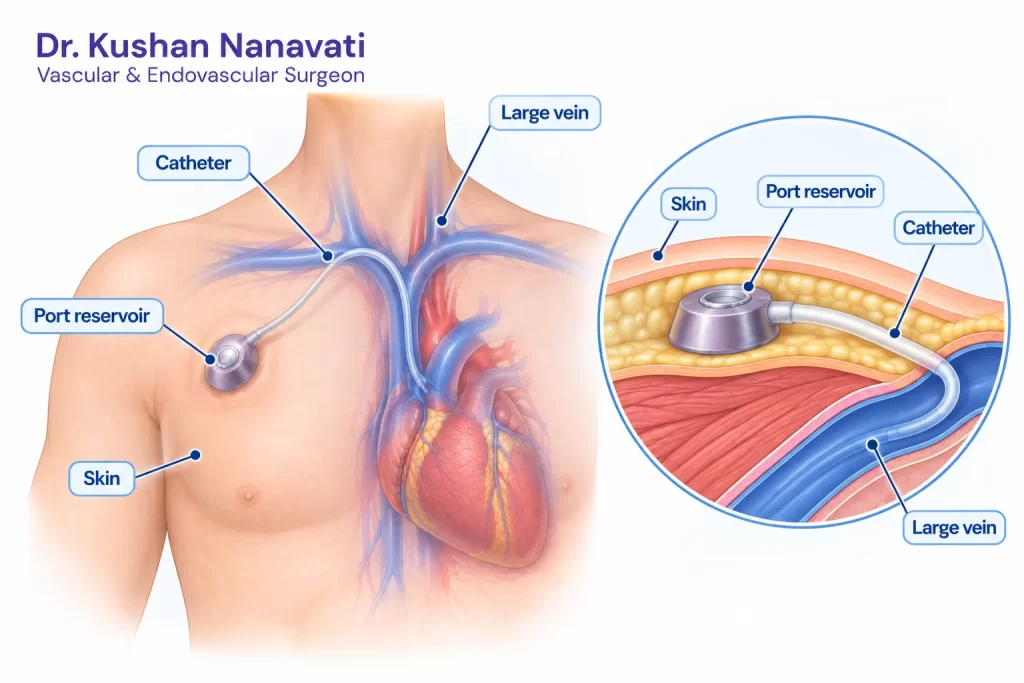
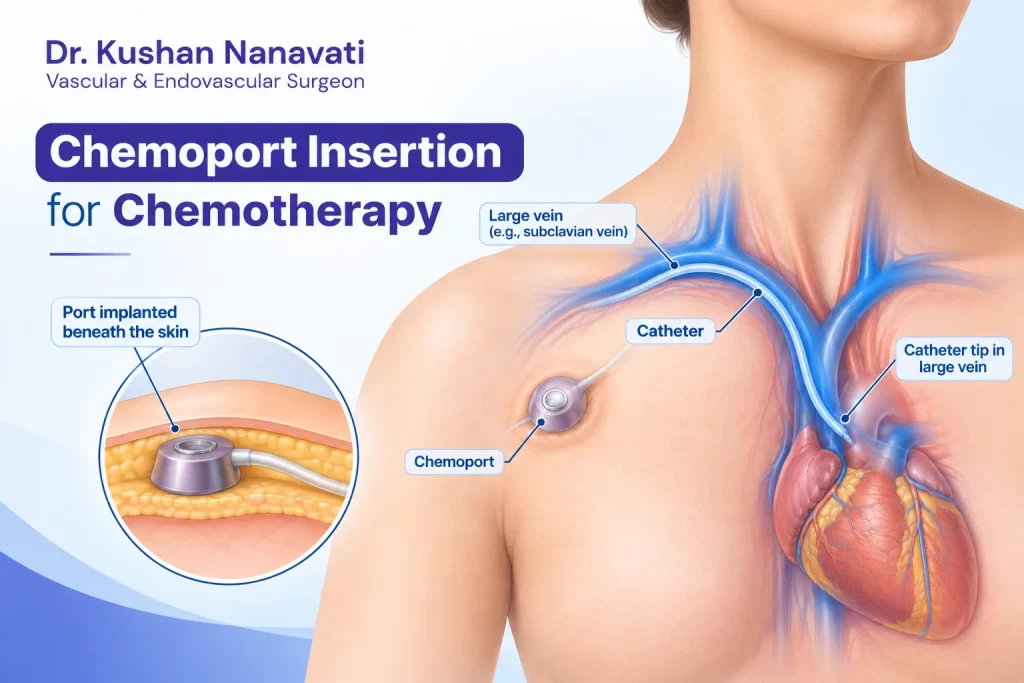
A chemoport, also known as an implanted port or port-a-cath, is a small device placed under the skin to provide long-term access to a vein.
The port consists of two main parts: a small reservoir placed beneath the skin and a thin catheter connected to a large vein. The reservoir can be accessed with a special needle whenever chemotherapy or other prescribed medications need to be administered.
Unlike a conventional IV cannula, which is inserted into a vein for a single treatment session, a chemoport can remain in place for an extended period when medically required.
For patients undergoing several cycles of chemotherapy, this can make repeated treatment sessions easier and more comfortable.
Why Do Cancer Patients Need a Chemoport?
Not every cancer patient requires a chemoport. The decision depends on factors such as the type of cancer, chemotherapy medicines being used, treatment duration, frequency of infusions, and the condition of the patient’s veins.
A chemoport may be recommended when:
- Chemotherapy is expected to continue for several weeks or months.
- Multiple treatment sessions are planned.
- The medicines may irritate smaller peripheral veins.
- A patient’s arm veins are difficult to access repeatedly.
- Long-term intravenous access is expected to be useful.
- Other medications or fluids may need to be administered through a reliable venous access device.
For some patients, having a port can make the overall treatment process less stressful by avoiding repeated attempts to find a suitable vein.
How Is Chemoport Insertion Performed?
Chemoport insertion is generally performed as a minimally invasive procedure. The exact technique can vary depending on the patient’s medical condition and the healthcare facility.
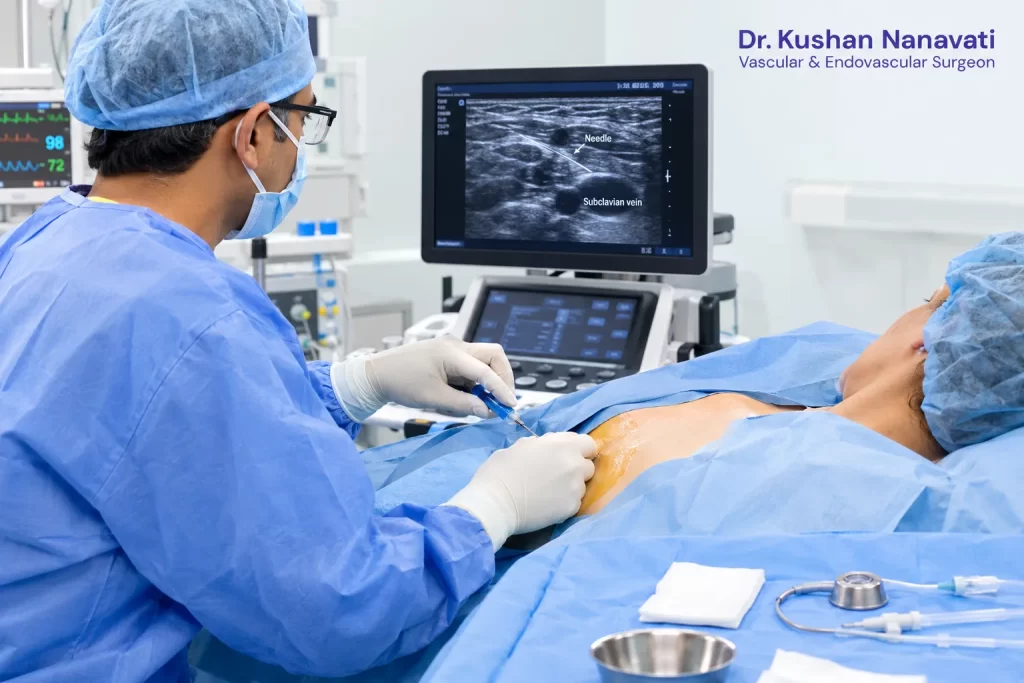
Before the procedure, the doctor reviews the patient’s medical history, medications, blood tests, and relevant imaging. The insertion site is then cleaned carefully, and local anaesthesia is commonly used to numb the area.
A catheter is guided into a large vein, while the port reservoir is positioned beneath the skin, usually in the upper chest area. The catheter is connected to the port, and the system is checked to ensure that it is functioning properly.
The procedure is usually completed within a relatively short period, although the exact duration can vary.
Imaging guidance may be used to help the doctor position the catheter accurately and safely.
What Does Chemoport Insertion Feel Like?
Patients are often concerned about whether port insertion will be painful.
Because local anaesthesia is used during the procedure, significant pain during insertion is generally avoided. You may feel pressure or movement during certain parts of the procedure.
Some soreness, bruising, or mild discomfort around the insertion site can occur afterward. This usually improves as the area heals.
Your doctor will provide specific instructions about wound care, activity, and medications following the procedure.
What Are the Benefits of a Chemoport?
One of the biggest advantages of a chemoport is reliable long-term venous access.
Fewer Repeated Needle Sticks
Convenient for Repeated Treatment
Less Stress for Patients With Difficult Veins
Can Remain in Place During Treatment
Can Be Used for More Than Chemotherapy
What Are the Possible Risks?
Although chemoport insertion is commonly performed, like any medical procedure, it has potential risks.
Possible complications include infection, bleeding, bruising, catheter blockage, blood clot formation, catheter displacement, or problems with the port.
Rarely, complications can occur during catheter placement, which is why the procedure should be performed by an experienced medical professional using appropriate precautions.
Patients should contact their healthcare team if they notice increasing redness, swelling, warmth, discharge, persistent pain, fever, chills, swelling of the neck or arm, or any other concerning symptom after port insertion.
How Should You Care for a Chemoport?
Proper care helps reduce the risk of complications.
Your healthcare team will explain how the port should be maintained and when it can be accessed. The area should be kept clean according to the instructions provided by your medical team.
Do not press, scratch, or repeatedly touch the port area unnecessarily. If the wound is still healing, follow the doctor’s instructions regarding bathing, dressing changes, and physical activity.
When the port is not being used regularly, it may require periodic flushing according to the device and the healthcare team’s protocol.
Most importantly, inform your healthcare provider promptly if you notice signs that could indicate infection or another complication.
Can You Live Normally With a Chemoport?
For many patients, a chemoport does not prevent them from continuing their usual daily activities once the insertion site has healed and the treating team has given appropriate advice.
The port sits underneath the skin, so there is no external tube permanently hanging from the body. This can make it more convenient than some other forms of long-term venous access.
However, activity restrictions may be recommended immediately after insertion. Your doctor will advise you about exercise, lifting, swimming, and other activities based on your recovery and overall health.
When Is a Chemoport Removed?
A chemoport is usually removed when it is no longer medically required or when the treating team determines that another form of venous access is more appropriate.
Removal is generally a separate minor procedure. The timing depends on the patient’s cancer treatment plan and the recommendation of the treating oncologist and vascular or procedural specialist.
It is not usually necessary to remove the port immediately after the final chemotherapy session if there is a clinical reason to keep it in place.
Why Choosing an Experienced Specialist Matters
Chemoport placement requires careful attention to venous anatomy, catheter positioning, infection prevention, and the patient’s individual medical condition.
An experienced Vascular Surgeon in Vadodara can evaluate the patient’s vascular access needs and determine the most appropriate approach for port placement.
Dr. Kushan Nanavati provides vascular care and can assess patients who require procedures involving venous access. A personalised evaluation is particularly important for patients with difficult veins, previous venous procedures, or other vascular concerns.
Patients looking for a Vascular Doctor in Vadodara should discuss the procedure with their treating cancer team and vascular specialist so that the timing and method of chemoport placement can be coordinated with the overall chemotherapy plan.
Frequently Asked Questions
1. Is chemoport insertion painful?
2. How long does a chemoport last?
3. Can chemotherapy be given immediately after port insertion?
4. Can a chemoport get infected?
5. Can I bathe or exercise with a chemoport?
6. Does every chemotherapy patient need a chemoport?
Conclusion
A chemoport can be an important part of cancer treatment for patients who require repeated chemotherapy or long-term intravenous access. By providing reliable access to a larger vein, it can reduce repeated needle sticks and make many treatment sessions more convenient.
Although chemoport insertion is generally a well-established procedure, proper patient selection, careful placement, and appropriate aftercare are important for reducing complications.
If your oncologist has recommended a chemoport, discuss the procedure, expected benefits, possible risks, and aftercare with your treating team. An experienced vascular specialist can also help assess your veins and determine the most appropriate approach for venous access.
Dr. Kushan Nanavati can evaluate patients requiring vascular procedures and provide guidance based on their individual medical and treatment requirements.
Medical Disclaimer: This article is intended for general educational purposes only and should not replace medical consultation, diagnosis, or treatment advice from a qualified healthcare professional.