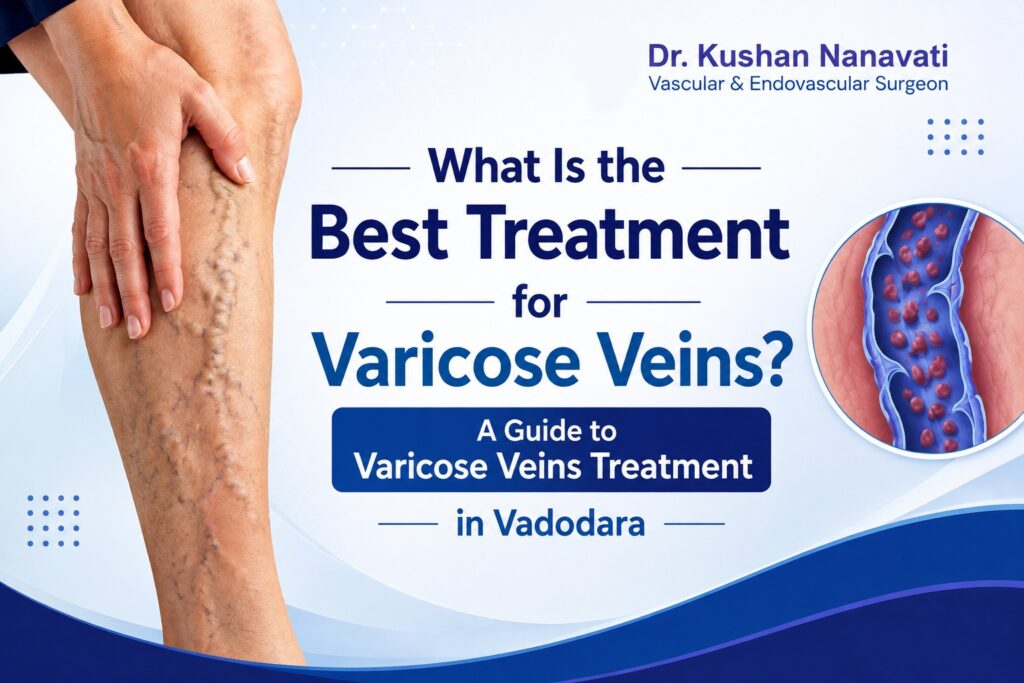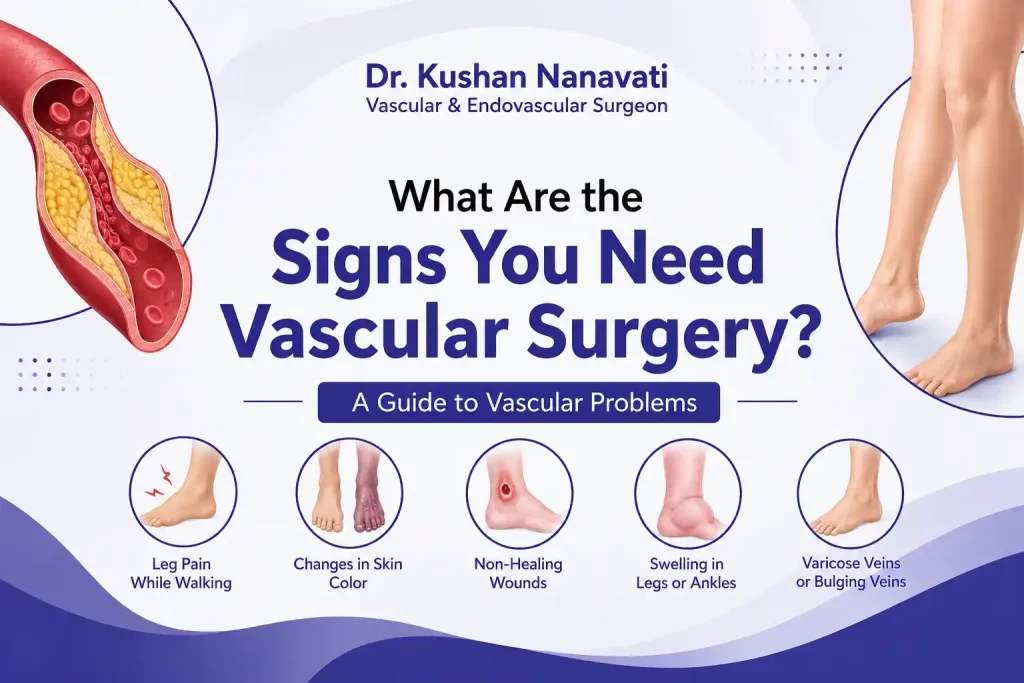

A red, purple, or bluish patch on the skin is often considered just a birthmark. In some cases, however, it may be a vascular malformation – an abnormal development of blood vessels that can be present from birth but may not become noticeable until later in life.
Some vascular malformations are harmless and require nothing more than observation. Others can cause pain, swelling, bleeding, skin changes, or problems involving nearby tissues. Knowing the difference is important because the appropriate treatment depends on the type of malformation, its location, symptoms, and blood-flow characteristics.
If you or your child has an unusual vascular lesion, consulting a qualified Vascular Doctor in Vadodara can help determine whether it needs monitoring, further investigation, or treatment.
What Are Vascular Malformations?
Vascular malformations are structural abnormalities of blood vessels that develop during fetal development. They are usually present from birth, although some may not become noticeable until childhood or adulthood.
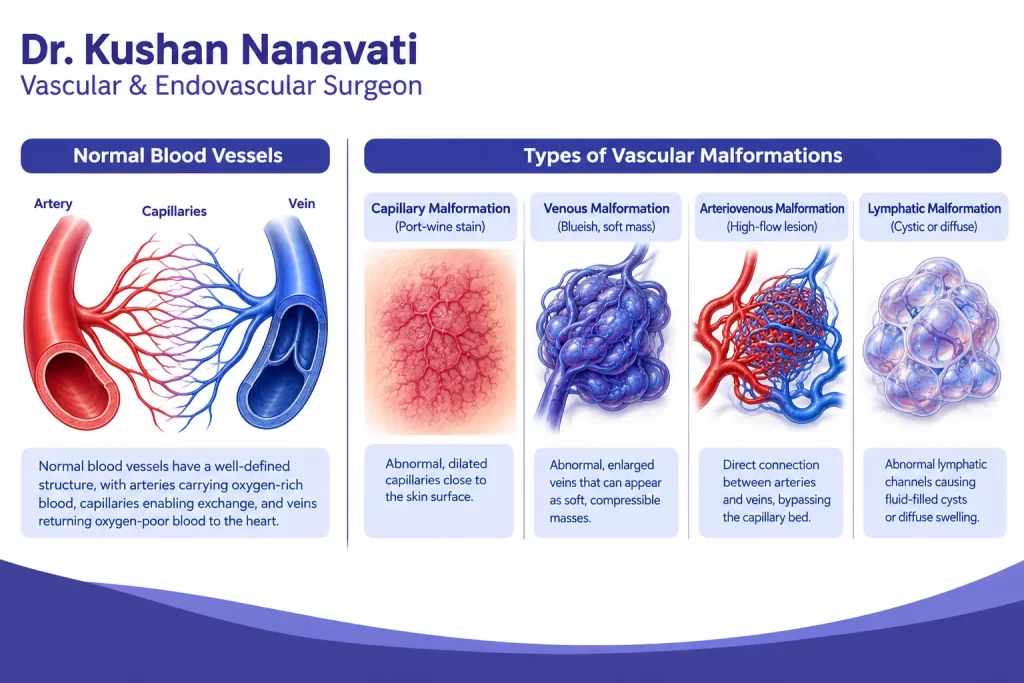
Depending on the vessels involved, vascular malformations may be classified as capillary, venous, lymphatic, arteriovenous, or combined malformations. They can also be described according to their blood-flow characteristics, such as slow-flow or fast-flow lesions.
Unlike some vascular tumors, vascular malformations are generally caused by abnormal development of the blood vessels rather than the uncontrolled growth of a tumor.
The appearance and symptoms can vary considerably from one person to another. Some remain stable for many years, while others may become more prominent or symptomatic over time.
Are Vascular Malformations the Same as Birthmarks?
Not every birthmark is a vascular malformation. However, certain vascular malformations can appear as birthmarks.
For example, capillary malformations may appear as flat pink, red, or purple patches on the skin. A port-wine stain is one familiar example. Some remain primarily a cosmetic concern, while others may require evaluation depending on their location and associated symptoms.
Venous malformations can appear as bluish or purple areas under the skin. They may become more noticeable when the affected body part is lowered or when pressure increases.
Because several skin and vascular conditions can look similar, it is better not to assume that a particular birthmark is harmless without proper evaluation, especially if it changes or becomes symptomatic.
Common Types of Vascular Malformations
Capillary Malformations
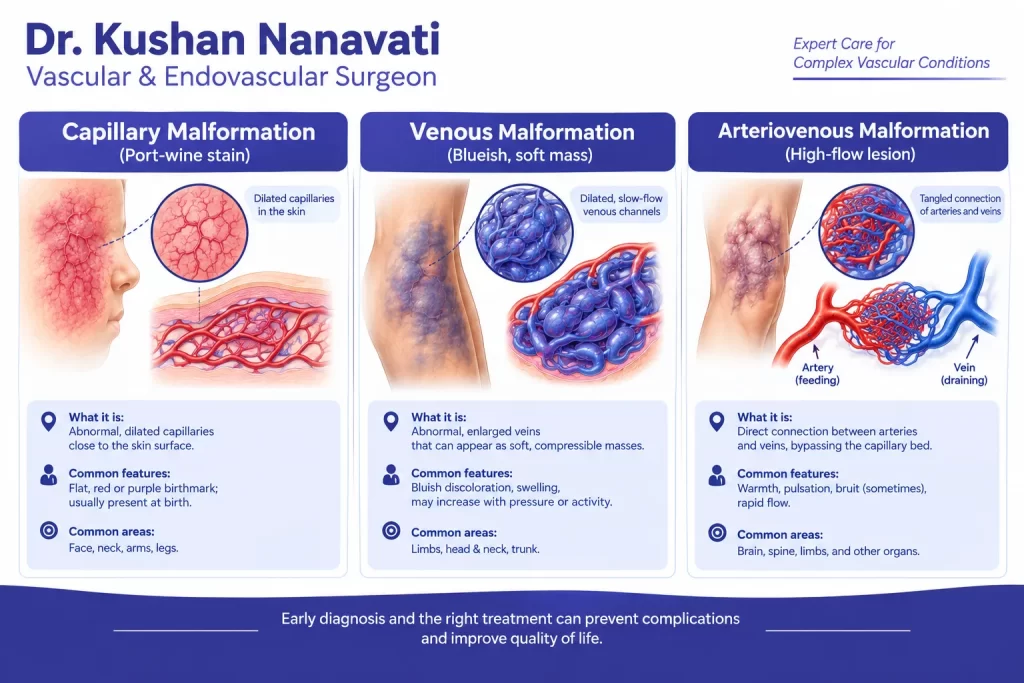
Capillary malformations involve small blood vessels near the surface of the skin. They commonly appear as flat areas of pink, red, or purple discoloration.
Some remain relatively unchanged, while others can become darker or more noticeable over time. Treatment may be considered when the lesion causes significant cosmetic concerns or, in selected cases, when it is associated with other problems.
Venous Malformations
Venous malformations involve abnormally formed veins and are generally slow-flow lesions. They may appear as soft, compressible bluish areas beneath or on the skin.
Patients may experience pain, swelling, heaviness, or discomfort, particularly after prolonged standing or physical activity. Some venous malformations can also develop localized clotting within the abnormal veins, which may cause tenderness.
It is important to distinguish venous malformations from ordinary varicose veins. If you are searching for Varicose Veins Treatment in Vadodara, an appropriate vascular assessment can help determine whether the problem is conventional varicose veins or a different vascular condition.
Arteriovenous Malformations (AVMs)
Arteriovenous malformations, commonly called AVMs, are different from slow-flow venous malformations. They involve abnormal connections between arteries and veins.
Because arteries carry blood under higher pressure, AVMs can produce symptoms such as warmth, swelling, pain, pulsation, skin changes, or bleeding. The risks depend greatly on the size and location of the AVM and the structures surrounding it.
An AVM should be evaluated carefully before treatment because its blood-flow pattern and connections with nearby blood vessels can influence the safest treatment approach.
What Symptoms Should You Watch For?
The symptoms of a vascular malformation can vary depending on its type, size, location, and blood-flow pattern.
Possible symptoms include:
- Pain or tenderness
- Swelling or a feeling of heaviness
- Red, purple, or bluish skin discoloration
- A soft or compressible lump
- Warmth or pulsation over the affected area
- Recurrent bleeding
- Skin breakdown or ulceration
- Changes in the size or appearance of the lesion
- Difficulty with movement when the malformation affects muscles or joints
A lesion that has been present since childhood should still be evaluated if it begins changing, becomes painful, bleeds, or interferes with everyday activities.
How Are Vascular Malformations Diagnosed?
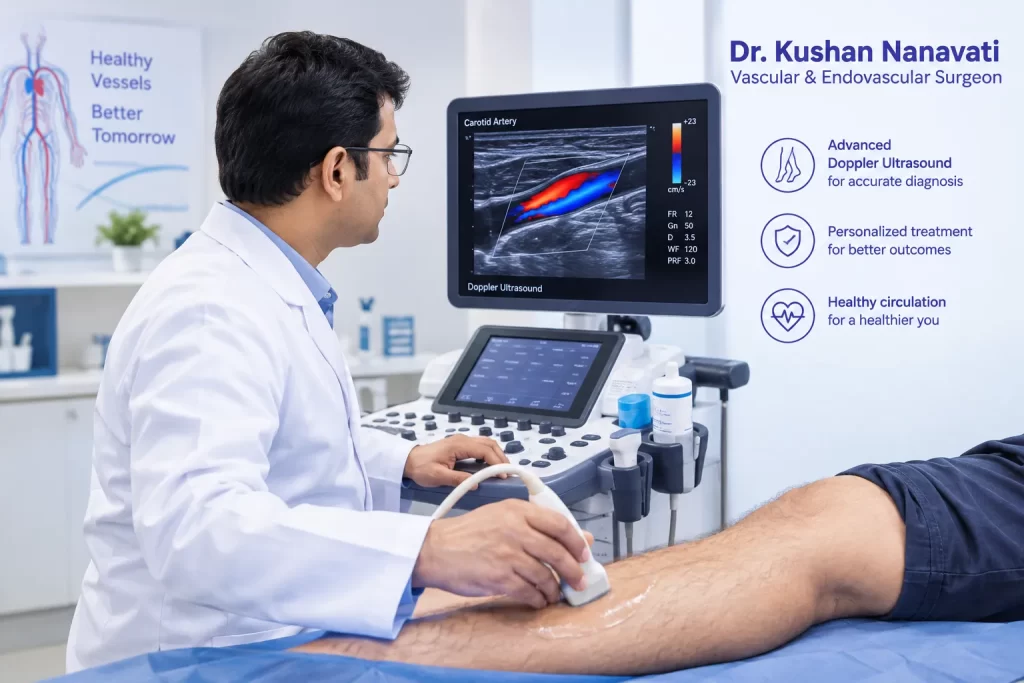
Diagnosis usually begins with a detailed medical history and physical examination. A vascular specialist may ask when the lesion was first noticed, whether it has changed over time, and whether symptoms such as pain, swelling, bleeding, or functional problems are present.
Depending on the suspected type of vascular malformation, imaging may be recommended. Doppler ultrasound can help assess blood flow and the vessels involved. In more complex cases, MRI or other vascular imaging may be useful to understand the size, depth, and relationship of the malformation with surrounding tissues.
Accurate diagnosis is important because different vascular malformations can require completely different management strategies.
When Does a Vascular Malformation Need Treatment?
Not every vascular malformation requires immediate treatment.
If a lesion is small, stable, painless, and does not interfere with normal function, the doctor may recommend observation and periodic follow-up.
Treatment may be considered when a vascular malformation causes:
- Persistent or significant pain
- Recurrent bleeding
- Progressive swelling
- Skin complications
- Functional limitations
- Repeated infections or other complications
- Significant cosmetic concerns
- Problems affecting nearby tissues or organs
The treatment selected depends on the individual case. Depending on the type and location, options may include compression therapy, sclerotherapy, embolization, laser treatment for selected superficial lesions, surgery, or a combination of treatments.
The goal is not simply to remove what can be seen on the skin. A specialist must also consider the underlying blood vessels and the potential risks of intervention.
Why Specialist Evaluation Matters
Vascular conditions can sometimes look similar even though their causes and treatment requirements are very different. For example, ordinary varicose veins, a venous malformation, and an AVM are not the same condition and should not automatically be treated in the same way.
This is why consulting an experienced Vascular Surgeon in Vadodara is important when a patient has an unusual vascular lesion, unexplained swelling, recurrent bleeding, or a suspected vascular malformation.
Dr. Kushan Nanavati provides evaluation and treatment planning for vascular conditions, with care tailored to the patient’s diagnosis, symptoms, and overall vascular health.
Can Vascular Malformations Get Worse With Age?
Some vascular malformations remain stable for years, while others can become more noticeable or symptomatic over time.
Growth or worsening symptoms may occur during certain stages of life or following factors such as hormonal changes, trauma, infection, or other physical stresses. This does not mean that every vascular malformation will become progressively worse.
Regular monitoring can be particularly useful when a lesion is known but does not currently require treatment. If there is a noticeable change in size, colour, pain, swelling, or bleeding, a specialist review is advisable.
When Should You See a Vascular Specialist?
A vascular consultation is recommended if a birthmark-like lesion becomes painful, starts bleeding, develops swelling, changes noticeably, or begins affecting movement or normal activities.
It is also worth getting an evaluation when a lesion has always been present but its diagnosis is uncertain. Being present since birth does not automatically mean that a vascular lesion can be ignored.
An evaluation does not necessarily mean that treatment will be required. In many cases, the purpose of consultation is simply to establish an accurate diagnosis and determine whether observation or intervention is appropriate.
Frequently Asked Questions
1. Are vascular malformations present from birth?
Most vascular malformations develop during fetal development and are therefore present from birth. However, some are very subtle and may not become noticeable until childhood, adolescence, or adulthood.
2. Can vascular malformations disappear on their own?
Most true vascular malformations do not simply disappear on their own. Some remain stable, while others can become more noticeable or symptomatic over time. Appropriate monitoring can help determine whether treatment is necessary.
3. Is every red or purple birthmark a vascular malformation?
No. There are many different types of birthmarks and skin lesions. Some involve blood vessels, while others have completely different causes. A medical examination is needed for an accurate diagnosis.
4. Are arteriovenous malformations dangerous?
An AVM can potentially cause complications depending on its size, location, blood-flow characteristics, and surrounding structures. Possible problems can include pain, bleeding, tissue changes, or functional issues. Anyone with a suspected AVM should undergo specialist assessment.
5. Does every vascular malformation require surgery?
No. Surgery is only one possible treatment and may not be suitable for every patient. Depending on the condition, treatment may involve observation, compression, sclerotherapy, embolization, laser treatment, surgery, or a combination of approaches.
6. When should I see a vascular surgeon for a birthmark?
You should consider specialist evaluation if the birthmark is painful, changes in size or appearance, bleeds, becomes swollen, feels warm or pulsatile, or affects normal movement or function.
7. Who should I consult for vascular malformations in Vadodara?
A qualified vascular specialist can examine the lesion, recommend appropriate imaging when necessary, and explain whether monitoring or treatment is appropriate. Patients looking for the Best Vascular Surgeon in Vadodara should consider the specialist’s experience, diagnostic approach, treatment options, and suitability for their particular condition.