
For people preparing for hemodialysis, creating reliable vascular access is an important part of treatment planning. An arteriovenous (AV) fistula connects an artery to a nearby vein, usually in the arm, so the vein can become stronger and suitable for repeated dialysis needle access. But how successful is AV fistula creation? The answer depends on whether the fistula is technically created successfully, matures enough for dialysis, and remains usable over time. Studies show that outcomes can vary considerably between patients and fistula types. A 2025 systematic review of radiocephalic AV fistulas reported a pooled maturation-failure rate of about 24.7%, highlighting why individual assessment matters. For patients considering Dialysis AV Fistula Creation in Vadodara, understanding these factors can help set realistic expectations before surgery.
What Is an AV Fistula and Why Is It Created?
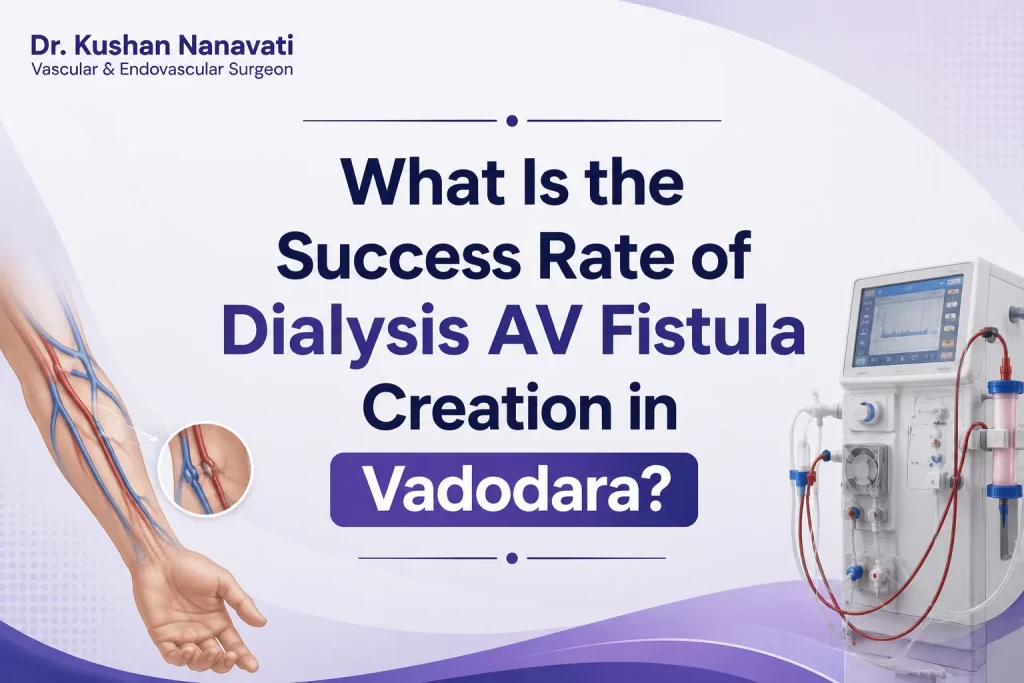
An AV fistula is a surgically created connection between an artery and a vein. The increased blood flow through the vein gradually causes it to enlarge and strengthen, making it better suited to withstand repeated needle punctures during hemodialysis.
AV fistulas are commonly preferred for long-term hemodialysis access because, when they mature and function well, they can provide durable access with fewer infection-related concerns than some alternatives.
However, creating the connection is only the first step. The fistula must mature before it can usually be used reliably for dialysis.
What Does “Success Rate” Mean for AV Fistula Creation?
The term “success rate” can mean different things. This is one reason patients may find different percentages when researching AV fistula outcomes.
Doctors may assess:
- Technical success: Whether the fistula was successfully created during the procedure.
- Maturation: Whether the vein develops enough size and blood flow to support dialysis.
- Primary patency: How long the fistula remains open without an intervention to restore or maintain function.
- Secondary patency: How long the access remains usable after procedures to correct problems such as narrowing or blockage.
Therefore, there is no single success percentage that applies to every patient. A fistula may be created successfully but later require an additional procedure to help it mature or maintain its function.
How Successful Is AV Fistula Maturation?
Published outcomes vary according to fistula location, patient characteristics, study design and how researchers define maturation. A large systematic review and meta-analysis of radiocephalic AV fistulas published in 2025 found a pooled maturation-failure rate of 24.7%. In other words, approximately three-quarters matured in the included studies, although the researchers reported substantial variation between studies.
Earlier research has also found considerable variation. A systematic review of AV fistula outcomes reported a primary failure rate of approximately 23%, while noting differences in patient populations and definitions used across studies.
These figures should not be treated as a personal prediction. Your expected outcome can be different depending on your blood vessels, medical conditions, previous vascular access and the type and location of fistula selected.
Factors That Can Affect AV Fistula Success
Several factors may influence whether an AV fistula matures properly and remains functional.
Quality and Size of the Blood Vessels
The condition of the artery and vein is important. Narrow, damaged or previously used vessels may make fistula creation or maturation more challenging.
Diabetes and Other Medical Conditions
Diabetes, cardiovascular disease and other conditions can affect blood vessels and circulation. Your vascular surgeon will consider your overall health when planning access.
Previous Dialysis Access
Previous fistulas, grafts, catheters or procedures can affect the available vessels. A careful assessment helps determine which arm and location may be most appropriate.
Age and Individual Anatomy
Age alone does not determine success, but older patients may have more complex vascular conditions. The anatomy of the arm and the quality of the available vessels also influence access planning.
Fistula Location
A fistula may be created in the forearm or upper arm, depending on individual anatomy and treatment needs. Different fistula types have different maturation and long-term outcomes.
How Is the Patient Evaluated Before AV Fistula Surgery?
Good planning begins before the operation. A vascular surgeon generally reviews the patient’s medical history and examines the circulation in the arms.
Duplex ultrasound or vascular mapping may be used to assess the arteries and veins, including their size, continuity and blood flow. This information can help identify suitable vessels and guide the choice of fistula location.
Preoperative assessment does not eliminate the possibility of maturation failure, but it helps the surgeon make a more informed access plan.
What Happens After AV Fistula Creation?
An AV fistula usually needs time to mature before regular dialysis use. During this period, the medical team monitors blood flow, vein development and signs of complications.
Patients should follow their healthcare team’s instructions carefully. They may be advised to:
- Check the fistula regularly for the expected vibration or “thrill.”
- Keep the surgical area clean and follow wound-care instructions.
- Avoid pressure or tight clothing over the access arm.
- Avoid blood pressure measurements or blood draws from the fistula arm unless specifically advised otherwise.
- Attend scheduled follow-up appointments.
If maturation is inadequate, additional treatment may sometimes improve the access rather than immediately abandoning it.
What Can Cause an AV Fistula to Fail?
Fistula failure can occur because of inadequate maturation, thrombosis, narrowing of the blood vessel, poor blood flow or other complications.
Some fistulas require an additional procedure to improve blood flow or correct a narrowing. Research has shown that interventions may be needed both during maturation and later to maintain access function.
Warning signs that deserve prompt medical attention include:
- Loss or significant change of the normal thrill
- Increasing swelling of the arm or hand
- Persistent pain around the access
- Bleeding that does not stop as expected
- Redness, warmth or discharge around the surgical area
- Difficulty with dialysis needle access or inadequate dialysis flow
Prompt assessment can help identify a potentially treatable access problem.
Why Follow-Up Matters After Fistula Creation
Successful AV fistula care does not end when surgery is completed. Regular clinical assessment allows the healthcare team to identify problems with maturation or blood flow.
In some cases, an ultrasound may be recommended when physical examination or dialysis performance suggests a problem. Early recognition of narrowing or inadequate maturation may allow corrective treatment before the access is permanently lost.
For patients seeking Dialysis AV Fistula Creation in Vadodara, discussing the planned access, expected maturation period and follow-up schedule with an experienced vascular surgeon can provide a clearer understanding of individual outcomes.
Choosing a Vascular Surgeon for AV Fistula Creation
AV fistula creation requires careful vascular assessment, appropriate vessel selection and precise surgical planning. The right access is not necessarily the same for every patient.
Dr. Kushan Nanavati, a vascular surgeon in Vadodara, can evaluate the patient’s vascular anatomy and overall clinical situation to determine an appropriate dialysis access strategy. Patients should discuss their kidney disease status, previous access procedures, dialysis plans and any concerns about fistula maturation during consultation.
The goal is not simply to create a fistula, but to establish vascular access that can support dialysis as safely and effectively as possible.
Conclusion
There is no single success rate for AV fistula creation because outcomes depend on whether the fistula matures, becomes usable and remains functional over time. Recent evidence shows that maturation failure is not uncommon, particularly with certain fistula types, but many fistulas can mature successfully and provide long-term dialysis access.
Patient-specific factors such as vessel quality, fistula location, age, diabetes, previous access and circulation can all influence the outcome. If you need dialysis access or have been advised to undergo fistula creation, a vascular evaluation can help determine the most appropriate approach. For personalized advice regarding Dialysis AV Fistula Creation in Vadodara, consult a qualified vascular surgeon who can assess your individual vascular anatomy and dialysis requirements.