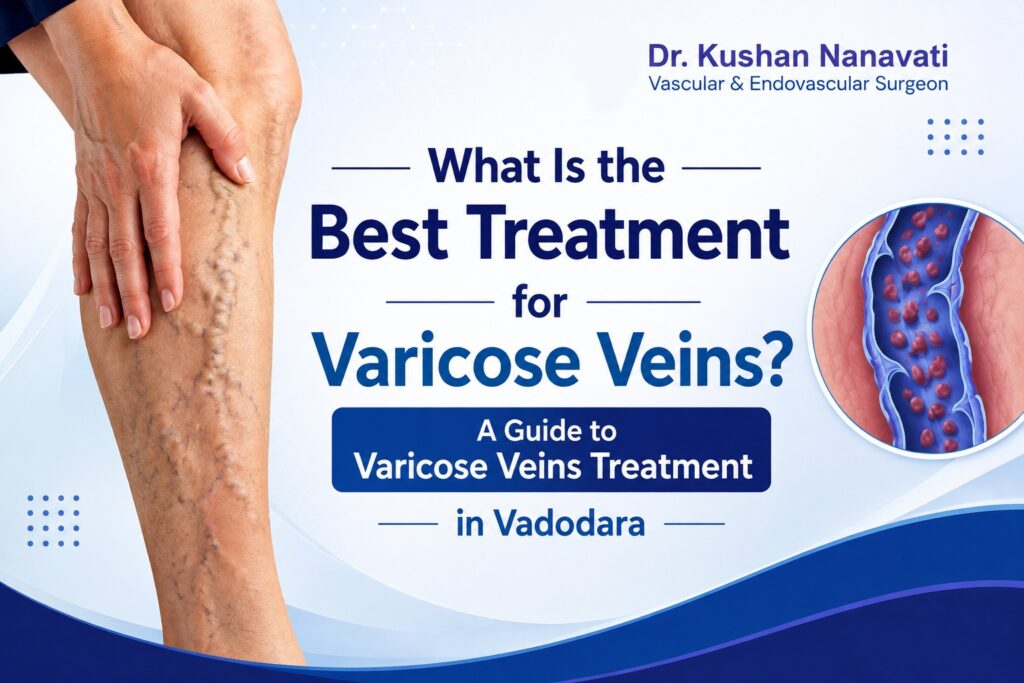

Varicose veins are enlarged, twisted veins that most commonly appear on the legs. They may cause visible bulging, aching, heaviness, swelling, itching, or discomfort, especially after prolonged standing. While some varicose veins are mainly a cosmetic concern, others can indicate an underlying problem with blood flow that deserves medical attention.
So, what is the best treatment for varicose veins? The answer depends on the vein problem, symptoms, severity, and overall health of the individual. Modern treatment may include lifestyle measures, compression therapy, minimally invasive procedures, or surgery when appropriate. For people looking for Varicose Veins Treatment in Vadodara, an evaluation by a qualified vascular surgeon can help identify the cause and select the most suitable approach.
What Causes Varicose Veins?
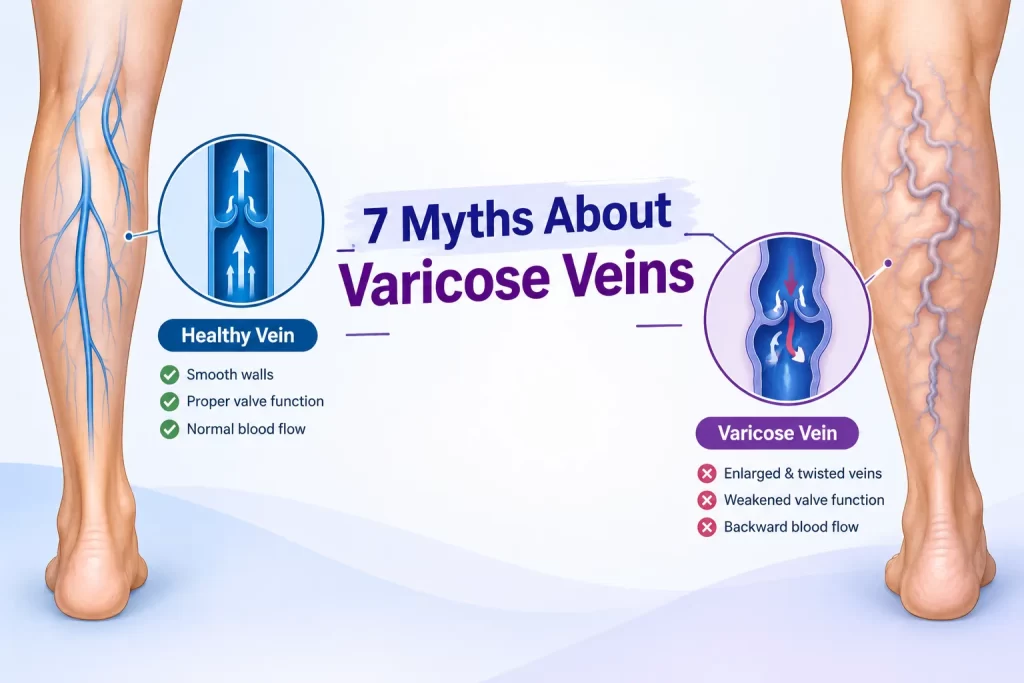
Healthy leg veins contain small valves that help blood move upward toward the heart. When these valves become weak or stop working properly, blood can flow backward and collect inside the veins. This increases pressure and gradually causes the veins to enlarge.
Several factors can increase the likelihood of developing varicose veins, including:
- Family history of vein problems
- Increasing age
- Pregnancy
- Long periods of standing or sitting
- Being overweight
- Limited physical activity
- Previous blood clots or vein problems
Varicose veins are often related to chronic venous insufficiency, a condition in which blood does not return efficiently from the legs.
What Symptoms Should You Look For?
Some people have visible varicose veins without significant discomfort. Others may develop symptoms that affect daily activities.
Common signs include:
- Bulging or twisted veins under the skin
- Aching or heaviness in the legs
- Swelling around the ankles or lower legs
- Burning, throbbing, or itching
- Leg cramps, particularly at night
- Skin discoloration around the ankles
- Skin changes or sores in more advanced cases
Symptoms that suddenly become severe, particularly swelling, pain, warmth, or redness in one leg, should be assessed promptly because they may have causes other than routine varicose veins.
How Are Varicose Veins Diagnosed?
A vascular specialist usually begins with a medical history and physical examination. The doctor may examine the legs while standing or sitting and assess visible veins, swelling, skin changes, and circulation.
A duplex ultrasound is commonly used when further evaluation is needed. This non-invasive test uses sound waves to examine blood flow and can identify abnormal backward flow, known as venous reflux. The findings help the vascular surgeon determine which veins are affected and whether treatment is necessary.
What Is the Best Treatment for Varicose Veins?
There is no single treatment that is best for every patient. Treatment is selected according to the underlying vein problem, symptoms, ultrasound findings, and individual circumstances.
Lifestyle Measures and Compression
For mild symptoms or patients who do not immediately require a procedure, conservative care may help manage discomfort. Regular walking and physical activity can support healthy circulation, while avoiding prolonged periods of standing or sitting may reduce symptoms.
Compression stockings can also help improve blood flow and reduce leg swelling. However, they should be selected appropriately, particularly if a person has other circulation problems.
These measures may control symptoms but do not necessarily eliminate the underlying faulty vein.
Endovenous Laser or Radiofrequency Treatment
Minimally invasive procedures are commonly used when an abnormal superficial vein contributes to varicose veins. Endovenous laser treatment (EVLT/EVLA) and radiofrequency ablation (RFA) use heat to close the affected vein.
Blood can then be redirected through healthier veins. These procedures generally involve a small access point rather than a large surgical incision, although suitability depends on the individual’s vein anatomy and clinical findings.
Sclerotherapy
Sclerotherapy involves injecting a medical solution into selected abnormal veins. The treated vein gradually closes and is eventually absorbed by the body.
It is often used for smaller varicose or spider veins and may sometimes be combined with another treatment. The appropriate technique depends on the size and location of the veins.
Surgical Treatment
In selected cases, surgery may be recommended, particularly when veins are extensive or when other treatment approaches are unsuitable. The type of surgery depends on the underlying problem and the patient’s overall condition.
A vascular surgeon can explain the benefits, limitations, risks, and expected recovery of each option before treatment.
What Are the Benefits of Treating Varicose Veins?
Treatment may help reduce symptoms such as aching, heaviness, swelling, and discomfort. It can also address abnormal blood flow and, in appropriate patients, improve the appearance of prominent veins.
Early assessment may be especially useful when there are persistent skin changes, recurrent swelling, or non-healing wounds. Treatment decisions should focus on the patient’s symptoms and vascular health rather than appearance alone.
When Should You See a Vascular Surgeon?
You should consider professional evaluation if varicose veins are painful, worsening, associated with persistent swelling, or affecting your daily routine. Medical assessment is also advisable when there are skin color changes, ulcers, bleeding from a vein, or recurrent symptoms.
For individuals seeking Varicose Veins Treatment in Vadodara, Dr. Kushan Nanavati, a vascular surgeon in Vadodara, can evaluate the condition and determine whether conservative management or a procedure is appropriate.
How Can You Reduce the Risk of Varicose Veins?
Not every case can be prevented, particularly when genetics or age contribute to the condition. However, several healthy habits can support better leg circulation:
- Walk regularly and stay physically active.
- Avoid sitting or standing in one position for long periods.
- Maintain a healthy body weight.
- Elevate the legs when resting if swelling occurs.
- Follow medical advice regarding compression stockings.
- Seek evaluation if symptoms become persistent or progressively worse.
These measures are useful for circulation and symptom management but should not replace medical evaluation when significant vein problems are present.
Common Misconceptions About Varicose Veins
One common misconception is that every varicose vein requires surgery. In reality, treatment ranges from observation and lifestyle measures to minimally invasive procedures and surgery, depending on the individual case.
Another misconception is that varicose veins are always harmless. Although many are not dangerous, persistent symptoms, skin changes, ulcers, bleeding, or significant swelling warrant professional assessment.
The goal is not simply to remove a visible vein. A proper evaluation should identify the source of abnormal blood flow and determine whether treatment is medically appropriate.
Frequently Asked Questions
1. What is the best treatment for varicose veins?
2. Can varicose veins go away without treatment?
3. Is laser treatment suitable for all varicose veins?
4. When should varicose veins be treated?
5. Who should I consult for varicose veins in Vadodara?
Conclusion
The best treatment for varicose veins is not the same for everyone. The right approach depends on the underlying venous problem, symptoms, ultrasound findings, and individual health needs. Lifestyle measures may help with mild symptoms, while procedures such as sclerotherapy, laser ablation, radiofrequency treatment, or surgery may be considered when clinically appropriate.
If persistent pain, swelling, skin changes, bleeding, or ulcers are present, do not rely only on home measures. Consulting a vascular specialist can help you understand the cause and make an informed decision about Varicose Veins Treatment in Vadodara.