
Introduction
Varicose veins are one of the most common vascular conditions in India – and in Vadodara, thousands of patients live with the discomfort, swelling, and cosmetic concern they cause, often without realising that effective, minimally invasive treatment is well within reach.
If you have noticed bluish, twisted, rope-like veins on your legs, or experience aching, heaviness, and swelling that worsens by evening, you may be dealing with varicose veins. The good news is that varicose veins treatment in Vadodara has advanced dramatically – most patients today are treated without traditional surgery, with minimal pain and a fast return to daily life.
This complete guide walks you through everything: what varicose veins are, why they develop, how they are diagnosed, and what treatment options are available to you right here in Vadodara.
What Are Varicose Veins?
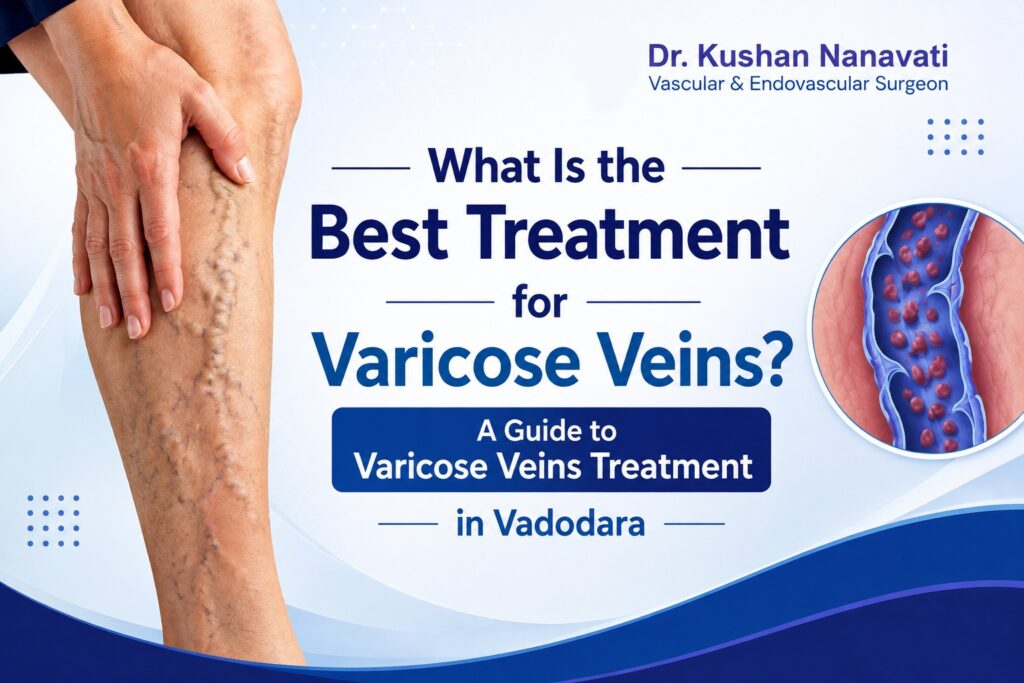
Veins carry blood back to the heart. Inside each vein are tiny one-way valves that open as blood flows toward the heart and close to prevent it from flowing back. When these valves become weak or damaged – a condition called venous insufficiency – blood pools in the vein instead of moving forward.
Over time, this pooling causes the vein to enlarge, bulge, and twist, creating what we see as varicose veins on the surface of the skin. The legs are most commonly affected because they must work against gravity to return blood to the heart.
Who Is at Risk?
Several factors increase the likelihood of developing varicose veins:
- Standing for long hours – teachers, nurses, retail workers, security guards
- Pregnancy – increased blood volume and hormonal changes weaken vein walls
- Obesity – extra weight puts pressure on leg veins
- Family history – varicose veins have a strong genetic component
- Age – vein walls naturally weaken with time
- Sedentary lifestyle – lack of movement slows venous blood flow
Women are more commonly affected than men, though the condition is by no means rare in men.
Symptoms to Watch For
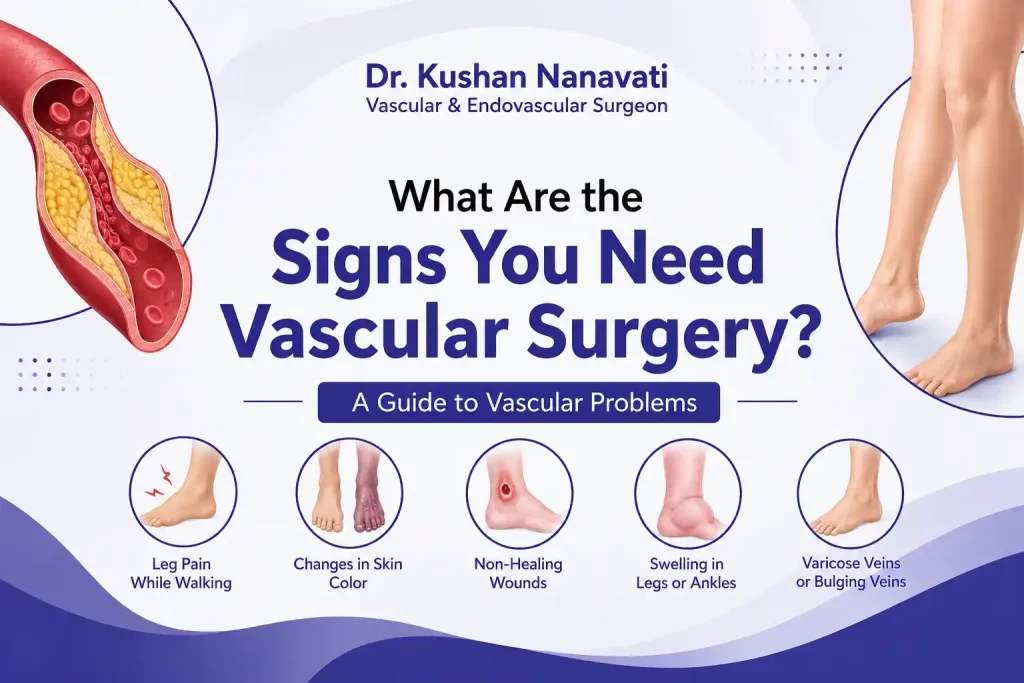
Varicose veins are not purely cosmetic. Many patients experience significant symptoms including:
- Visible, bulging blue or purple veins on the legs
- Aching, heaviness, or fatigue in the legs, worse after prolonged standing
- Swelling around the ankles and calves
- Itching or a burning sensation over the affected vein
- Skin discolouration or thickening around the ankle (in advanced cases)
- Leg cramps, especially at night
In severe, untreated cases, varicose veins can lead to skin ulcers, bleeding veins, and blood clots (superficial thrombophlebitis or DVT).
Diagnosis: What to Expect at a Vascular Clinic in Vadodara
Diagnosing varicose veins involves more than just a visual examination. Your vascular specialist will perform a colour Doppler ultrasound – a painless imaging test that maps the blood flow in your leg veins, identifies which valves are incompetent, and determines the extent of the disease.
This ultrasound is the cornerstone of treatment planning. It tells the surgeon exactly which veins need treatment and which approach will be most effective – information that cannot be obtained from examination alone.
Varicose Veins Treatment Options in Vadodara
1. Conservative Management (For Mild Cases)
For patients with early-stage or mild varicose veins, conservative measures may manage symptoms adequately:
- Compression stockings – graduated pressure stockings improve venous blood flow
- Leg elevation – raising the legs above heart level reduces pooling
- Exercise – particularly walking, which activates the calf muscle pump
- Weight management
Conservative measures do not eliminate varicose veins but can slow progression and relieve symptoms.
2. Endovenous Laser Treatment (EVLT)
EVLT is one of the most widely performed and well-proven treatments for varicose veins in Vadodara. A thin laser fibre is inserted into the affected vein under local anaesthesia, guided by ultrasound. Laser energy heats and seals the vein from within, causing it to collapse and eventually be absorbed by the body.
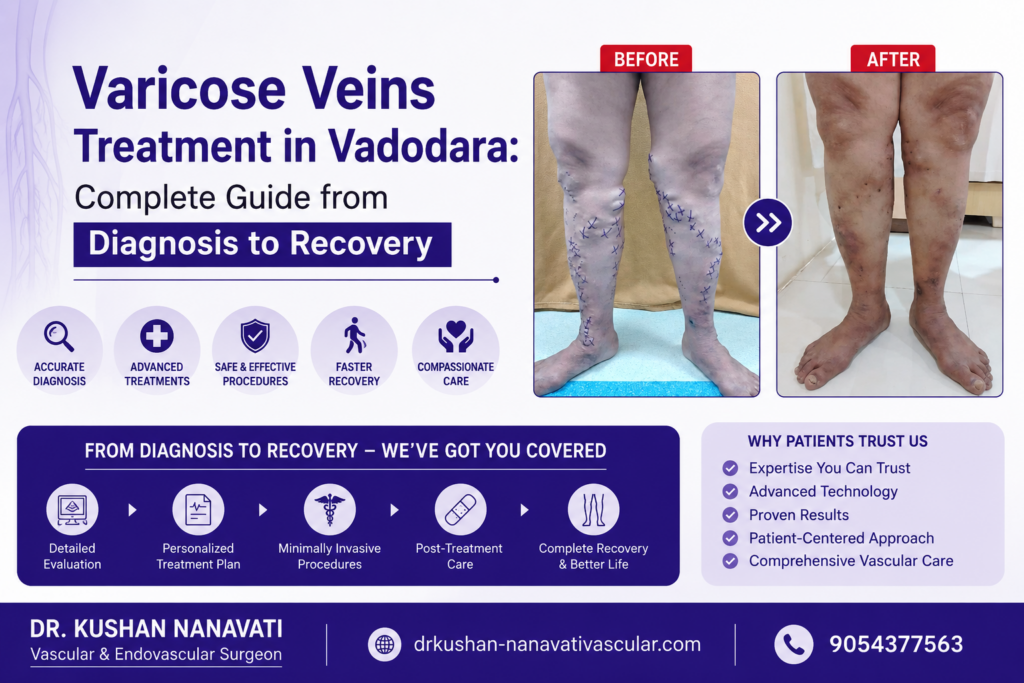
EVLT is performed as a daycare procedure – patients walk in, undergo the treatment, and walk out the same day. There is minimal pain, no surgical scars, and a return to normal activity within 1-2 days for most patients.
3. Radiofrequency Ablation (RFA)
4. VenaSeal (Vein Glue)
5. Sclerotherapy
Sclerotherapy involves injecting a chemical solution directly into smaller varicose veins and spider veins, causing them to scar and close. It is most effective for smaller, superficial veins and is often used as a complementary treatment after EVLT or RFA to address residual vessels.
6. Surgical Stripping (Traditional Surgery)
Which Treatment Is Right for You?
What Does Varicose Veins Treatment Cost in Vadodara?
Treatment costs in Vadodara vary based on the procedure type, hospital, and number of veins treated. As a general guide:
- Compression stockings: ₹800-₹3,000
- Sclerotherapy (per session): ₹3,000-₹8,000
- EVLT or RFA (per limb): ₹40,000-₹80,000
- VenaSeal: ₹60,000-₹1,00,000+
Most health insurance policies now cover varicose vein treatment when it is performed for medical (not cosmetic) indications. Confirm with your insurer prior to treatment.
Recovery After Varicose Veins Treatment
Recovery is generally swift for minimally invasive procedures:
- Day 1: Walk immediately after procedure; minor bruising or tightness is normal
- Week 1-2: Compression stockings worn; light activity encouraged; avoid prolonged sitting or standing
- Week 3-4: Resume most normal activities; follow-up Doppler scan to assess results
- Month 2-3: Full recovery; visible veins fade progressively
Frequently Asked Questions (FAQs)
1. Are varicose veins dangerous if left untreated?
Yes, in advanced cases. Untreated varicose veins can lead to chronic venous insufficiency, skin changes, venous leg ulcers, and blood clots including DVT. Early treatment prevents these complications.
2. Do varicose veins come back after treatment?
3. Is varicose vein laser treatment painful?
4. Can I treat varicose veins during pregnancy?
5. How long do I need to wear compression stockings after treatment?
Conclusion
Varicose veins are not something you simply have to live with. In Vadodara, advanced, minimally invasive treatment options are available that can eliminate varicose veins with minimal discomfort, no hospitalisation, and a rapid return to normal life.
If you are experiencing leg pain, visible veins, or swelling – do not wait for the condition to progress. Consult a qualified vascular specialist in Vadodara, get a Doppler ultrasound assessment, and explore the treatment option that is right for your condition. The sooner you act, the simpler and more effective the treatment.