
Have you ever experienced persistent pain in your shoulder, arm or hand, along with tingling, numbness or weakness? Do these symptoms become worse when you raise your arms, exercise or perform repetitive activities?
While many people associate these problems with muscle strain, cervical spine issues or nerve compression, there may be another underlying cause: Thoracic Outlet Syndrome (TOS).
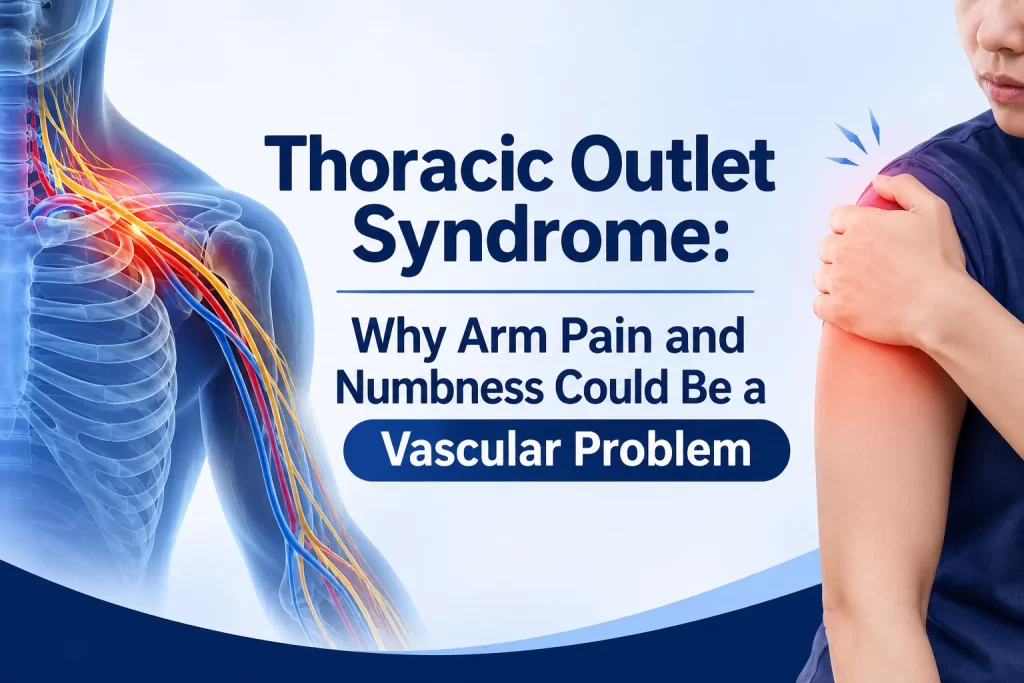
Thoracic Outlet Syndrome is a condition in which nerves or blood vessels become compressed in the space between the collarbone and the first rib. This compression can interfere with normal nerve function and blood circulation, resulting in pain, numbness, swelling and weakness in the affected arm.
In some cases, the condition can involve the arteries or veins supplying the upper limbs, making it important to identify the problem early.
According to Dr. Kushan Nanavati, Consultant Vascular and Endovascular Surgeon in Vadodara, understanding the vascular causes of arm discomfort is an important step towards appropriate diagnosis and treatment.
Let’s understand what Thoracic Outlet Syndrome is, why it develops, its warning signs, and the available treatment options.
What Is Thoracic Outlet Syndrome?
Thoracic Outlet Syndrome is a medical condition caused by the compression of nerves, arteries or veins passing through the thoracic outlet.
The thoracic outlet is a narrow passage located between the collarbone (clavicle) and the first rib, near the base of the neck. Important structures, including the brachial plexus (a network of nerves), subclavian artery and subclavian vein, pass through this region to reach the arm.
When these structures become compressed, they may not function properly.
Depending on which structure is affected, patients may experience:
- Pain in the neck, shoulder or arm.
- Tingling or numbness in the fingers.
- Weakness or fatigue in the affected arm.
- Swelling in the arm or hand.
- Changes in hand colour or temperature.
- Reduced blood circulation to the fingers.
Thoracic Outlet Syndrome is not always a vascular condition. It can involve nerves, veins or arteries, and each type requires a different treatment approach.
What Are the Three Types of Thoracic Outlet Syndrome?
Thoracic Outlet Syndrome is classified into three main types depending on the structures being compressed.
1. Neurogenic Thoracic Outlet Syndrome
Neurogenic TOS occurs when the brachial plexus nerves become compressed.
It is the most common form of Thoracic Outlet Syndrome.
Common symptoms include:
- Pain in the neck, shoulder and arm.
- Tingling or numbness in the fingers.
- Weakness in the hand or arm.
- Difficulty performing overhead activities.
- Muscle fatigue or discomfort after repetitive movements.
Patients may notice that their symptoms become worse while working at a desk, lifting objects or keeping their arms raised for extended periods.
2. Venous Thoracic Outlet Syndrome
Venous TOS develops when the subclavian vein becomes compressed, restricting the normal return of blood from the arm towards the heart.
This can cause blood to accumulate in the affected arm. In certain cases, compression can lead to a blood clot in the vein, a condition known as Paget-Schroetter syndrome or effort thrombosis.
Common symptoms include:
- Sudden swelling in one arm.
- A feeling of heaviness or tightness.
- Bluish or purplish discolouration of the hand or arm.
- Visible veins around the shoulder or chest.
- Pain that may develop after strenuous upper-body activity.
Venous TOS needs prompt medical evaluation, particularly when symptoms develop suddenly.
3. Arterial Thoracic Outlet Syndrome
Arterial TOS occurs when the subclavian artery becomes compressed as it passes through the thoracic outlet.
This can reduce blood supply to the affected arm and hand. Prolonged compression may damage the artery, sometimes resulting in an aneurysm or blood clot formation.
Common symptoms include:
- Coldness in the affected hand.
- Pain during arm activity.
- Pale or discoloured fingers.
- Weak or reduced pulse in the affected arm.
- Numbness or unusual sensations in the fingers.
- Poor blood circulation to the hand.
Arterial TOS is uncommon but can cause serious complications if left untreated.
Why Does Thoracic Outlet Syndrome Develop?
Several anatomical, physical and lifestyle-related factors can contribute to Thoracic Outlet Syndrome.
Understanding these risk factors can help identify people who may need medical evaluation.
1. Cervical Rib
Some people are born with an additional rib located above the first rib, near the neck. This is known as a cervical rib.
The extra bone can reduce the available space in the thoracic outlet and compress nearby nerves or blood vessels.
2. Repetitive Overhead Activities
Activities that involve repeatedly raising the arms can contribute to compression around the thoracic outlet.
Examples include:
- Swimming.
- Weightlifting.
- Playing certain overhead sports.
- Painting or construction work.
- Repetitive overhead occupational activities.
3. Previous Injury or Trauma
Injuries involving the neck, shoulder or collarbone can change the surrounding anatomy and contribute to compression of nerves or blood vessels.
4. Muscle Enlargement or Tightness
Enlargement or tightness of muscles around the neck and shoulder region may contribute to narrowing of the thoracic outlet.
5. Anatomical Variations
Some people naturally have variations in their bones, muscles or fibrous bands that reduce the space available for nerves and blood vessels.
How Do You Know If Arm Pain Is Related to a Vascular Problem?
Not every instance of arm pain or numbness indicates a vascular condition. However, certain symptoms may suggest that blood vessels are involved.
Pay attention to the following warning signs:
| Symptom | Possible Concern |
|---|---|
| Persistent arm pain | Nerve or vascular compression |
| Sudden arm swelling | Venous compression or blood clot |
| Bluish discolouration | Reduced venous blood return |
| Cold fingers or hand | Reduced arterial blood supply |
| Pale fingers | Possible arterial circulation problem |
| Weakness and tingling | Possible nerve compression |
| Reduced pulse | Possible arterial compression |
One important difference is that vascular Thoracic Outlet Syndrome may produce visible changes in the arm, such as swelling, colour changes or temperature differences.
If you experience sudden swelling, severe pain, a cold or pale hand, or sudden loss of circulation, seek urgent medical attention.
Important: Symptoms alone cannot confirm Thoracic Outlet Syndrome. A proper clinical examination and appropriate investigations are necessary.
How Is Thoracic Outlet Syndrome Diagnosed?
Accurate diagnosis is essential because different types of Thoracic Outlet Syndrome require different management approaches.
A vascular specialist may recommend a combination of clinical examination and imaging investigations.
1. Clinical Examination
The doctor evaluates the patient’s medical history, symptoms and physical condition.
This may include:
- Checking the pulse in both arms.
- Assessing arm strength and sensation.
- Examining the neck and shoulder region.
- Evaluating swelling and changes in skin colour.
- Performing specific arm-position tests to assess symptom reproduction.
2. Colour Doppler Ultrasound
Colour Doppler ultrasound is a non-invasive investigation that helps evaluate blood flow through the arteries and veins.
In suspected vascular TOS, ultrasound may be performed in different arm positions to identify changes in blood flow and detect venous thrombosis.
3. CT Angiography (CTA)
CT Angiography provides detailed images of blood vessels and surrounding anatomical structures.
It can help identify vascular compression, arterial damage, aneurysms and blood clots.
4. MR Angiography (MRA)
MR Angiography provides detailed images of blood vessels without using conventional X-ray imaging.
It may help evaluate vascular structures and surrounding soft tissues.
5. Venography or Angiography
In selected cases, catheter-based venography or angiography may be recommended to assess blood vessel narrowing, obstruction or other vascular abnormalities.
The choice of investigation depends on the patient’s symptoms and clinical findings.
What Are the Treatment Options for Thoracic Outlet Syndrome?
Treatment depends on the type of Thoracic Outlet Syndrome, the severity of compression and whether the nerves, arteries or veins are affected.
There is no single treatment suitable for every patient.
1. Conservative Treatment
Patients with neurogenic TOS may initially benefit from non-surgical management.
This may include:
- Specialised physiotherapy.
- Posture correction.
- Stretching and mobility exercises.
- Activity modification.
- Avoiding repetitive movements that aggravate symptoms.
- Medication when clinically appropriate.
Physiotherapy is generally an important first-line approach for neurogenic TOS when there are no indications for urgent intervention.
2. Thoracic Outlet Decompression Surgery
When significant compression persists or vascular complications develop, surgical treatment may be considered.
Thoracic outlet decompression aims to create more space for the compressed nerves and blood vessels.
Depending on the patient’s anatomy and condition, the procedure may involve removing the first rib and releasing surrounding structures that contribute to compression.
3. Treatment for Venous Thoracic Outlet Syndrome
If venous compression has resulted in a blood clot, treatment may involve:
- Anticoagulation medication.
- Catheter-directed thrombolysis in selected patients.
- Mechanical clot removal in appropriate cases.
- Thoracic outlet decompression.
- Selected venous reconstruction procedures when required.
The treatment plan depends on the duration of the clot, the extent of venous obstruction and the patient’s overall condition.
4. Treatment for Arterial Thoracic Outlet Syndrome
Arterial TOS requires careful assessment because prolonged compression can damage the artery.
Depending on the findings, treatment may involve:
- Thoracic outlet decompression.
- Removal of the first rib when indicated.
- Repair or reconstruction of the damaged artery.
- Arterial bypass in selected cases.
- Treatment of associated blood clots or embolisation when necessary.
Early diagnosis can help reduce the risk of permanent vascular damage.
When Should You Consult a Vascular Surgeon?
Many people initially ignore arm pain, numbness or swelling, assuming it is caused by muscle fatigue or poor posture.
However, persistent or unexplained symptoms should not be overlooked.
You should consider consulting a vascular specialist if you experience:
- Repeated arm pain without an obvious explanation.
- Swelling in one arm, particularly after physical activity.
- Bluish or pale discolouration of the fingers.
- Unusual coldness in one hand.
- Symptoms that worsen when raising your arms.
- Persistent numbness or tingling accompanied by circulation changes.
A vascular surgeon can evaluate whether the symptoms are associated with arterial or venous compression and recommend appropriate investigations.
Sudden arm swelling, severe pain, a cold or pale hand, or sudden weakness requires urgent medical assessment rather than a routine appointment.
Thoracic Outlet Syndrome Treatment in Vadodara - Consult Dr. Kushan Nanavati
If you are experiencing persistent arm pain, numbness, swelling or other symptoms that may indicate a vascular problem, getting the right diagnosis is important.
Dr. Kushan Nanavati (MBBS, MS, DNB) is a Consultant Vascular and Endovascular Surgeon practising at Aadicura Superspeciality Hospital, Vadodara, Gujarat.
He specialises in the diagnosis and management of various arterial and venous conditions. His website also lists Thoracic Outlet Syndrome among the vascular conditions for which treatment information is provided.
His vascular practice includes services and procedures such as:
- Vascular ultrasound and Duplex imaging.
- Colour Doppler investigations.
- Angiography.
- Catheter-guided thrombolysis for selected arterial and venous blood clots.
- Balloon angioplasty and vascular stenting.
- Vascular bypass surgery.
- Management of deep vein thrombosis.
The appropriate treatment for Thoracic Outlet Syndrome depends on the individual patient’s diagnosis and vascular condition.
If you are looking for a vascular surgeon in Vadodara, consider consulting Dr. Kushan Nanavati for an evaluation of persistent arm pain, numbness or suspected vascular compression.
Frequently Asked Questions
1. Can Thoracic Outlet Syndrome cause arm pain and numbness?
2. Is Thoracic Outlet Syndrome a vascular disease?
3. Can Thoracic Outlet Syndrome cause blood clots?
4. Which doctor should I consult for Thoracic Outlet Syndrome?
5. Can Thoracic Outlet Syndrome be treated without surgery?
6. Is Thoracic Outlet Syndrome dangerous?
7. When should I seek emergency medical attention?
Conclusion
Persistent arm pain, numbness and swelling should not always be dismissed as muscle strain or nerve-related discomfort. In some patients, these symptoms may indicate Thoracic Outlet Syndrome, a condition involving compression of nerves or blood vessels near the collarbone.
Recognising the symptoms and identifying whether the condition is neurogenic, venous or arterial is essential for choosing the right treatment.
If you are experiencing unexplained arm pain, swelling, numbness or changes in hand circulation, consider seeking an expert evaluation.
For Thoracic Outlet Syndrome evaluation and vascular care in Vadodara, consult Dr. Kushan Nanavati, Consultant Vascular and Endovascular Surgeon at Aadicura Superspeciality Hospital.